
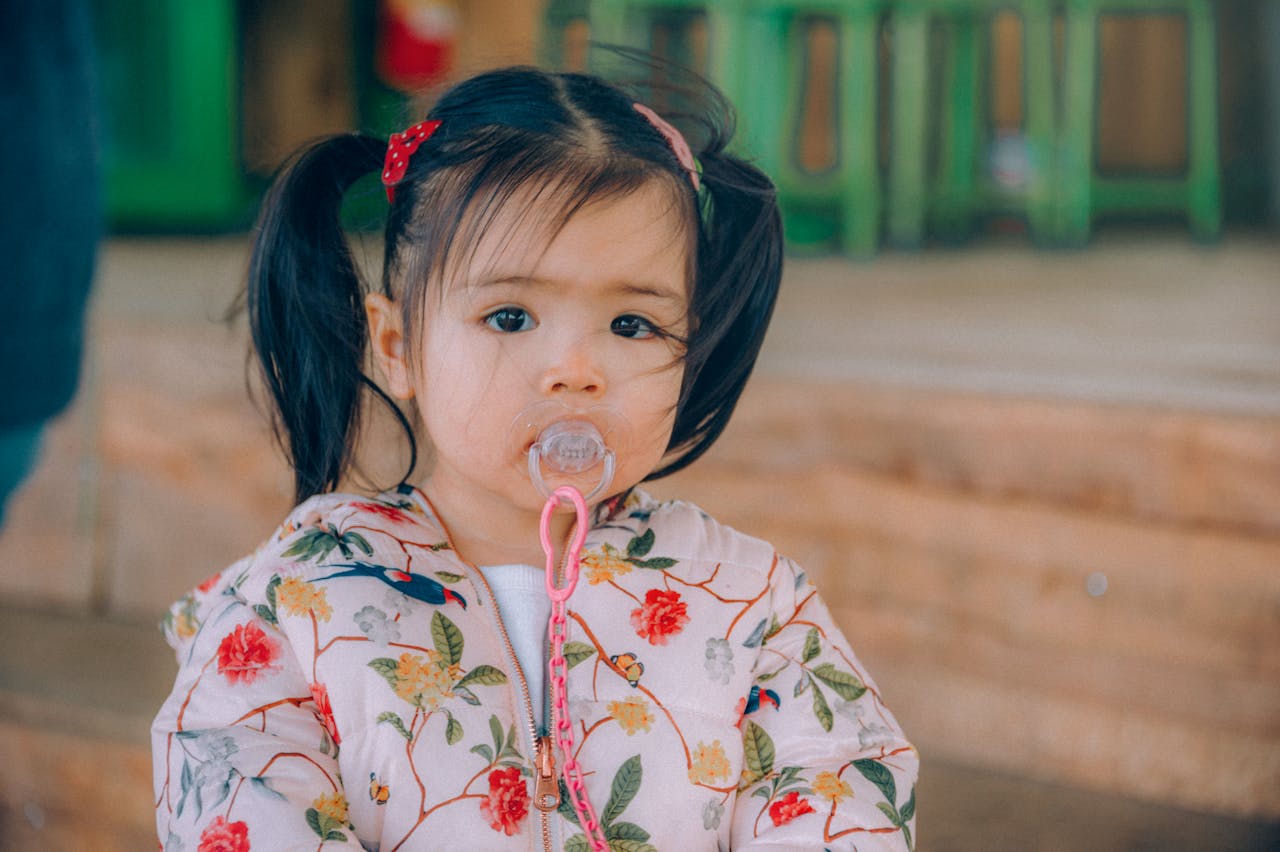
Pacifiers can be a lifesaver for soothing newborns, support self-regulation, and even reduce the risk of sudden infant death syndrome (SIDS) in the earliest months of life.
But when pacifier use continues beyond its ideal window, this comforting habit can quietly influence how your child’s face, jaws, and airway develop, sometimes with lasting effects.
At Presidential Holistic Dentistry, we believe that early education and gentle intervention are essential to helping children grow into healthy, well-balanced adults. Understanding when a pacifier becomes a problem is an important first step.
Let’s talk about the binky, and when it becomes a concern.
How Long Is Too Long?
The healthiest window for pacifier use is typically from birth to about six months of age.
After this stage, continued sucking habits—whether from pacifiers, thumbs, or bottles—can begin to interfere with natural growth patterns of the mouth and face.
Why? Because the muscles of the lips, tongue, and jaw are constantly shaping the bones beneath them. Prolonged sucking applies pressure in ways the growing face was not designed to handle long-term.
How Prolonged Pacifier Use Affects Oral Development
Extended pacifier use can contribute to several structural and functional changes, including:
- Narrow dental arches that limit space for proper tooth alignment
- Open bites or crowded teeth as the jaws develop unevenly
- Low tongue posture, preventing the tongue from resting against the palate
- Improper lip seal, encouraging mouth breathing
- Restricted nasal airway growth, which can limit airflow
These changes often occur gradually and may go unnoticed until symptoms appear.
The Long-Term Impact: More Than Just Teeth
Over time, altered jaw and airway development can lead to:
- Snoring or restless, disrupted sleep
- Chronic mouth breathing
- Speech delays or articulation issues
- Feeding challenges
- Facial growth imbalance
What may seem like a small habit in infancy can influence how your child breathes, sleeps, and functions for years to come.
Why Airway Development Matters
A healthy airway is foundational to your child’s overall well-being. Proper airway development supports:
- Deep, restorative sleep
- Healthy brain development and focus
- Emotional regulation and behavior
- Balanced facial growth
When the airway is restricted, children may appear hyperactive, inattentive, or emotionally dysregulated not because of behavior issues, but because they are chronically under-rested and under-oxygenated.
In some cases, these symptoms can mimic or contribute to ADHD-like behaviors, rooted in poor sleep rather than neurological dysfunction.
Breaking the Habit Early
If your child is still using a pacifier after six months, it’s time to start weaning gently. Here’s how you can help:
- Gradually reduce pacifier use
- Seek guidance from a pediatric or occupational therapist
- Schedule an evaluation with a myofunctional therapy specialist
How Myofunctional Therapy Can Help
At Presidential Holistic Dentistry, our structured myofunctional therapy program is designed to support healthy growth by:
- Restoring proper tongue and oral posture
- Strengthening the muscles of the lips, tongue, and face
- Encouraging nasal breathing
- Supporting optimal jaw and airway development
- Improving sleep quality and daytime function
We partner closely with parents to identify early signs of imbalance and provide personalized, non-invasive strategies that support natural, healthy development, right from the start.
Ready to Take the Next Step?
If you’re concerned about your child’s pacifier use, breathing habits, or oral development, you don’t have to navigate it alone.
📞 Schedule a holistic airway consultation with Presidential Holistic Dentistry today and give your child a strong foundation for healthy breathing, restful sleep, and lifelong wellness, naturally.***