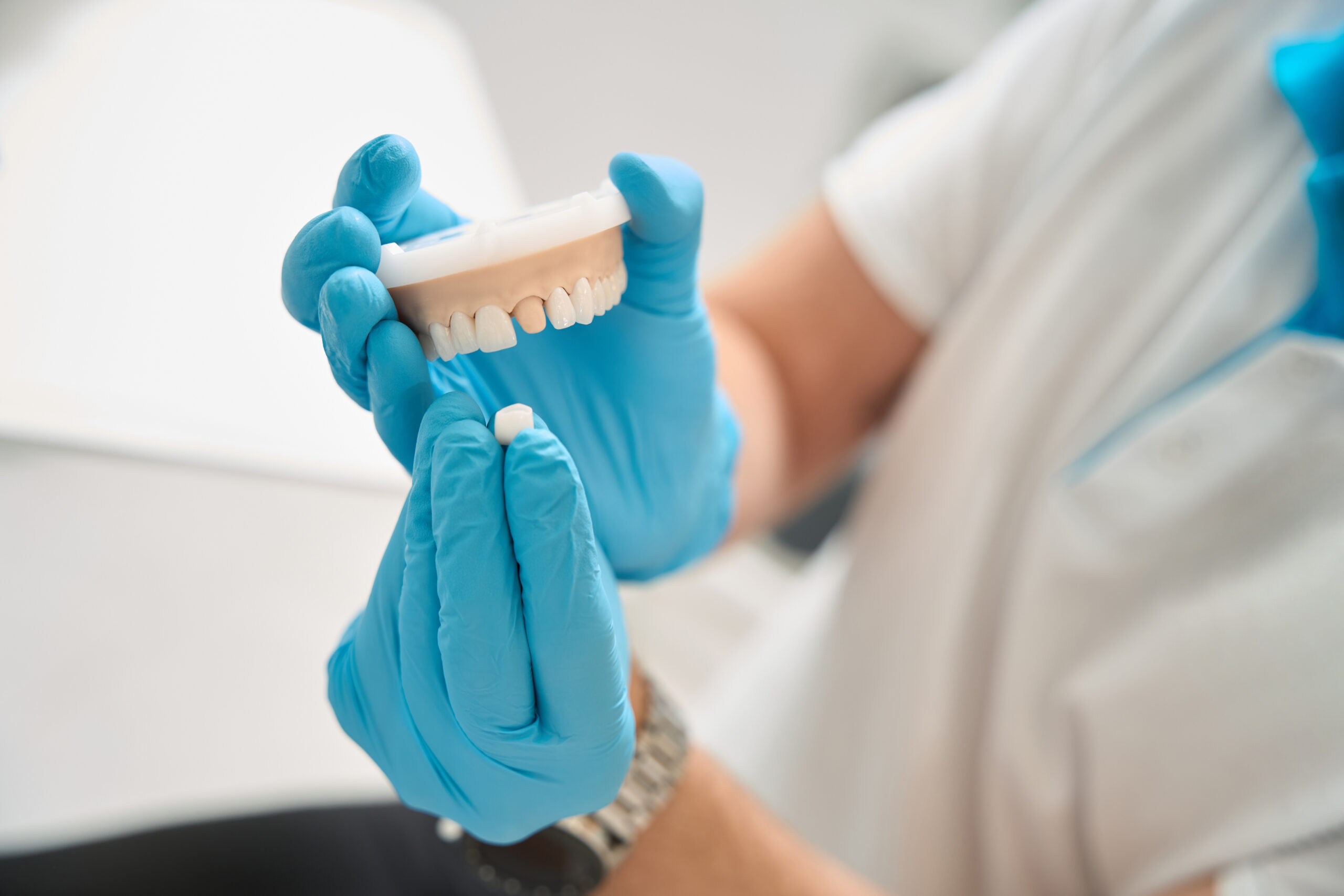
Restoring Teeth with a Metal-Free Approach
When a tooth is worn, cracked, weakened by decay, or affected by an older filling, it may need more support than a standard filling can provide. In these cases, a dentist may recommend a ceramic crown or dental onlay to restore strength, protect the tooth, and help you chew comfortably again.
Both options can repair damaged teeth, but they are not used in the same way. The right choice depends on how much healthy tooth structure remains, where the damage is located, and how the tooth handles pressure when you bite.
What Is a Ceramic Crown?
A ceramic crown is a custom restoration that covers the visible portion of a tooth. It may be recommended when a tooth has extensive damage, a large fracture, or not enough remaining structure to support a more conservative repair. Once placed, the crown helps protect the tooth from further wear while restoring its shape, function, and appearance.
Ceramic materials are often chosen because they can blend with surrounding teeth. For patients who prefer a metal-free approach, ceramic restorations can support a natural-looking smile without relying on metal materials.
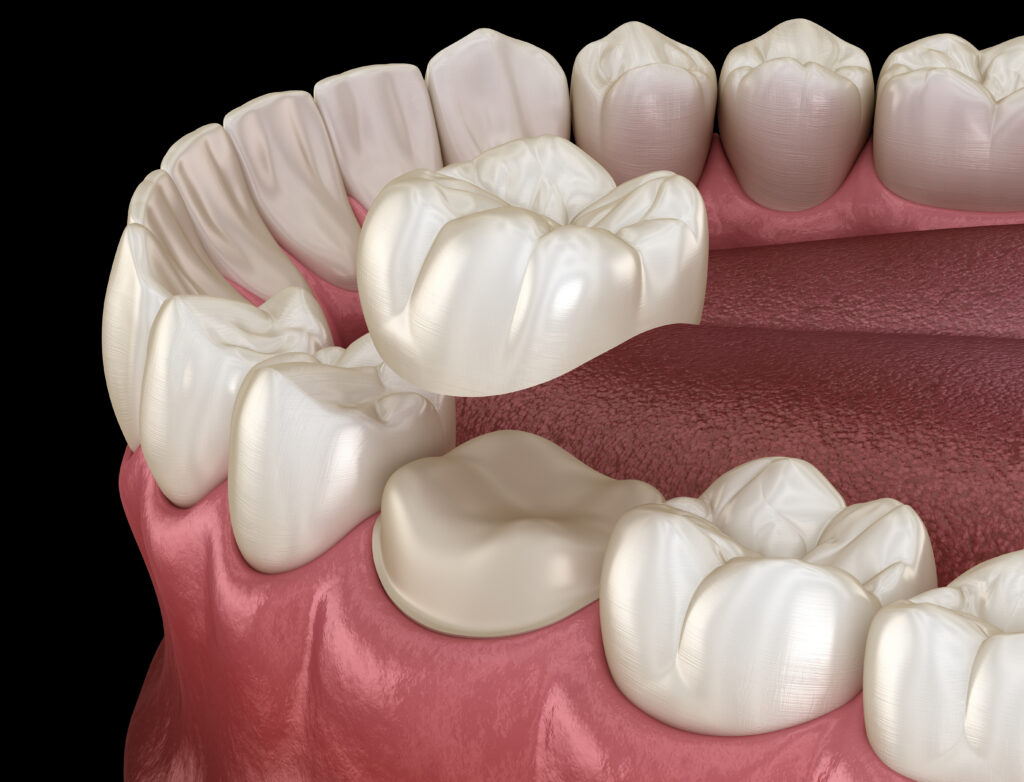
What Is a Dental Onlay?
A dental onlay is also custom made, but it usually covers only the damaged or weakened portion of the tooth. This makes it a more conservative option in many cases. Instead of reducing the tooth on all sides, an onlay can reinforce the areas that need support while preserving more natural tooth structure.
Onlays may be recommended when a tooth is too compromised for a filling, but does not require full crown coverage. They can protect the chewing surface, strengthen weakened areas, and reduce the risk of future cracks or fractures.
Why Tooth Preservation Matters
Keeping healthy tooth structure is an important part of long-term dental health. Natural enamel helps protect the inner layers of the tooth and contributes to strength, comfort, and stability. When treatment is planned carefully, the goal is to repair damage while respecting the natural design of the tooth.
This is especially important for patients who value a holistic or biomimetic approach to dentistry. Rather than choosing the most extensive treatment by default, your dentist can assess which restoration best supports the tooth.
Caring for Ceramic Restorations
Ceramic crowns and onlays should be cared for much like natural teeth. Brush twice daily, floss carefully around the restoration, and keep up with routine dental visits. Avoid chewing ice, biting hard objects, or using your teeth as tools, since these habits can place unnecessary stress on teeth and restorations.
Presidential Holistic Dentistry offers metal-free restorative options for patients who want to protect damaged teeth while supporting long-term oral and overall wellness. If you have a cracked, worn, or weakened tooth, schedule your new patient exam to learn whether a ceramic crown or biocompatible onlay may be right for you.